
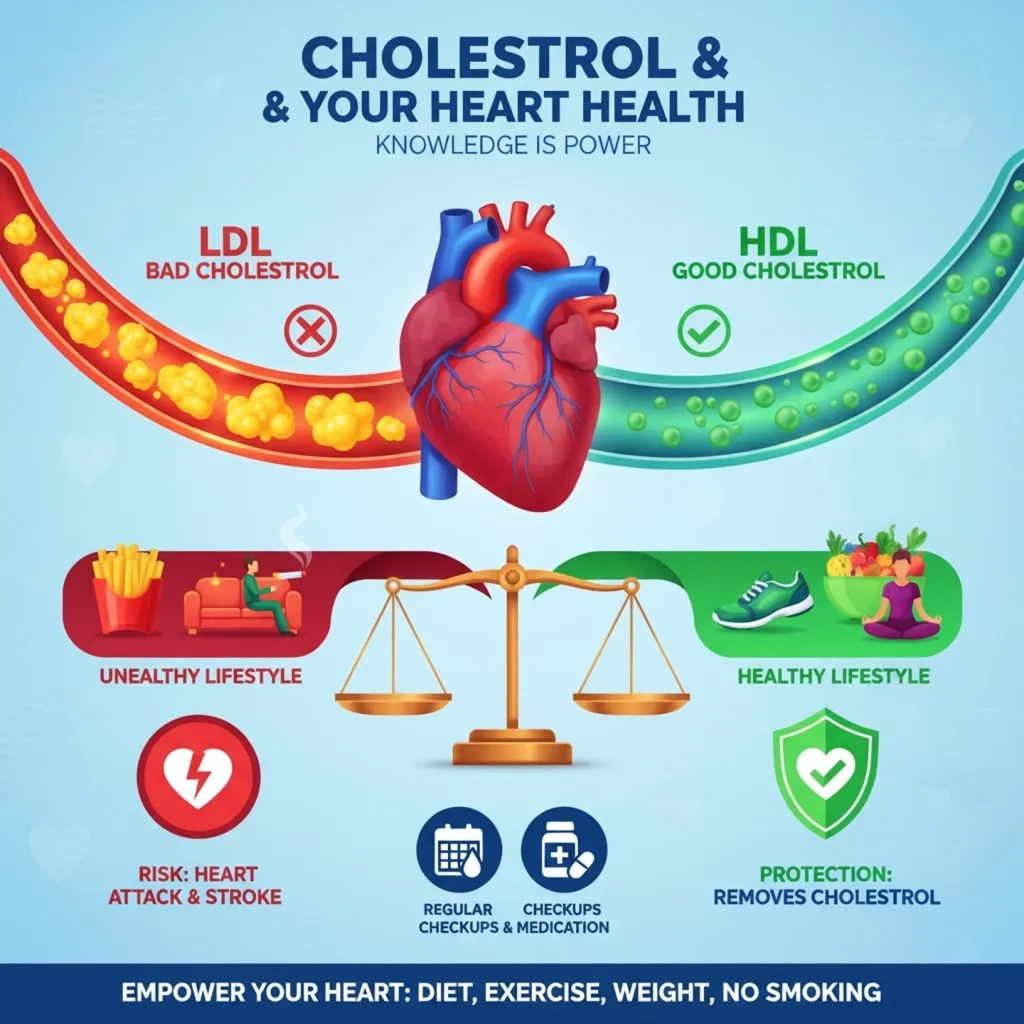
Cholesterol & Your Heart Health
Cholesterol is a natural, fat-like substance your body needs for building healthy cells and producing hormones, but having too much can be harmful to your heart. High levels of LDL (“bad”) cholesterol can block arteries and raise the risk of heart disease and stroke, while HDL (“good”) cholesterol helps remove excess cholesterol from the blood.
Since high cholesterol often has no symptoms, regular checkups are important. Eating a balanced diet, staying active, maintaining a healthy weight, and avoiding smoking can help keep cholesterol at healthy levels, while in some cases, medication may be needed to manage risks.

Causes of High Cholesterol
Several factors can raise cholesterol levels
Unhealthy Diet – Eating foods high in saturated and trans fats.
Obesity – Being overweight increases LDL and triglycerides.
Genetics – Some people inherit conditions like familial hypercholesterolemia.
Age & Gender – Cholesterol naturally rises with age.
Health Risks of High Cholesterol
If untreated, high cholesterol can lead to:
Coronary artery disease
Heart attack
Stroke
Peripheral artery disease
High blood pressure
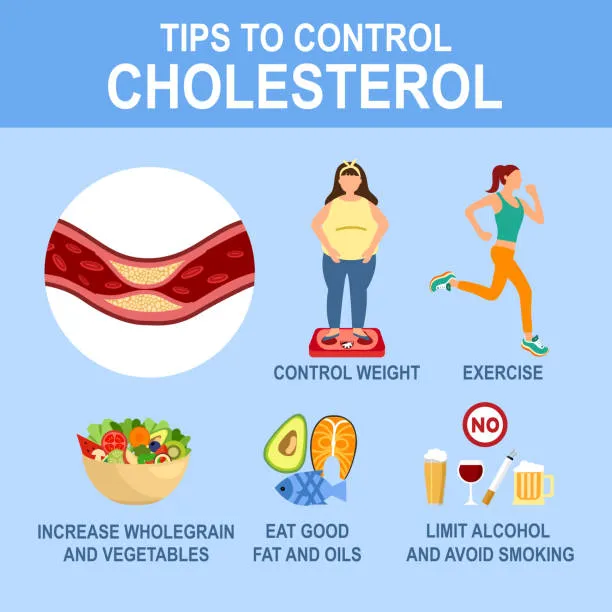
Natural Ways to Lower Cholesterol
Eat More Fiber: Oats, beans, apples, and flax seeds help reduce LDL.
Healthy Fats: Use olive oil, nuts, and fatty fish instead of fried foods.
Stay Active: Exercise helps raise HDL and lower LDL.
Avoid Trans Fats: Found in many fast foods and packaged snacks.
Manage Stress: Chronic stress affects cholesterol and heart health.
What exactly is cholesterol, and why does it matter?
Cholesterol is a waxy substance found in your blood. Your body needs it for building cells, but too much can block arteries and raise heart disease risk.
What foods should I avoid to keep my cholesterol in check?
Avoid fried foods, processed meats, bakery snacks, and foods made with hydrogenated oils.
Which foods can actually help lower cholesterol?
Oats, beans, nuts, flaxseeds, olive oil, and fatty fish like salmon are great for managing cholesterol.